Incorporating Balancing Machines In Predictive Maintenance
Balancing machines help balance rotating machine parts in components such as rotors, fans, propellers, and turbines. It is crucial to ensure these machines can operate without major breakdowns.
A balancing machine usually includes two rigid pedestals, in addition to suspension and bearings on top of it to support a mounting platform. The asset being tested is usually bolted to the platform, from which it is rotated either with a belt or end drive for vibration and other measurements to be taken.
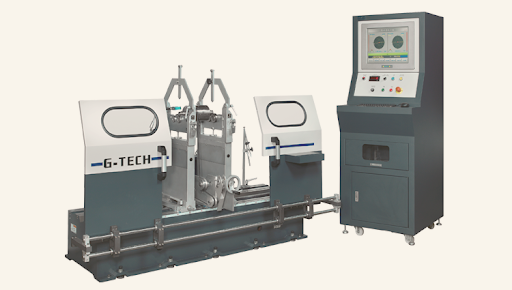
In this article, we learn about the importance of incorporating balancing machines in your predictive maintenance strategy and how G-TECH's HJ-4250S-A/B Horizontal Balancing Machine is ideal for you.
What is Dynamic Balancing?
Dynamic balancing describes a method to balance machines or equipment by rapidly rotating parts in order to measure the levels of imbalance. It is crucial in machine health monitoring and provides the basis for both diagnosing problems with machinery and correcting such problems. In short, the information gathered in this way is vital as it means that malfunctioning components can be corrected.
Vibrations in predictive maintenance can help determine the health of your machine or machine component parts. All machines vibrate, and by establishing a baseline vibration for machines during healthy or peak performance, engineers can use vibration signals to determine when machines or machine parts are faulty or under stress. The balancing process involves the removal or addition of weight to the device until the effective mass centre of the machine moves closer to the true axis.
Why is Dynamic Balancing Important?
The primary goal of machine balancing is to ensure that all your lines of operation avoid unplanned or unscheduled downtimes. Unbalance in machinery or equipment happens when there is an uneven distribution of mass around a rotor’s axis of rotation. By balancing the machine, you reduce uneven mass distribution in rotating elements by the removal or addition of compensating mass.
An unbalanced rotor results in stress and wear and tear in machine components, which in turn can lead to several issues, including failure in:
- Bearings
- Bushings
- Gears
- Shafts
- Spindles
Repeated failures of this sort can drive up the cost of repairs and maintenance and reduce the life of your assets. In addition to increased costs and reduced asset life, other disadvantages include a reduction in machine performance.
Advantages of Balancing Machines
Balancing machines can contribute significantly to a successful predictive maintenance strategy for your operations. How does it do so? Below is a list of advantages of using balancing machines:
- Lengthening bearing life
- Reduce operator fatigue
- Improve efficiency in power operations
- Improving product quality
- Reducing downtimes and machine failures
- Improving asset life
- Worker safety
Balancing machines play a crucial role in ensuring that your machines can operate at peak performance and over a long period of time. It also helps to reduce unscheduled downtimes and the associated costs. Read on to learn more about the balancing machines available at G-TECH.
G-TECH's HJ-4250S-A/B Horizontal Balancing Machine
HJ-4250S-A/B is G-TECH’s horizontal hard-support balancing machine designed and manufactured for high-speed and high-precision machine tool spindles. This balancing machine uses Finite Element (FEM) software to measure and diagnose machinery. The tool is ideal for a wide and dizzying list of applications:
- Machine tool spindles
- High-speed built-in spindles
- Generator rotors
- Motors
- Rollers
- Fans
- Centerless grinding wheels
- Textile machine rollers
- Rubber machine rollers
- Axial fans
- Windmill calibrations
The balancing machine comes equipped with a high-sensitivity sensor to measure rotor unbalance force. In addition, it also includes a high-speed, high-resolution, and noise-resistant signal acquisition unit to calculate the unbalance force, as well as a convenient and easy-to-understand operation interface, which even the most junior engineers can use.
Other features include a spectrum analysis function to analyze the rotational characteristics of the spindle or motor rotor to determine the causes of vibration and the misalignment of the bearing assembly verticality. To learn more about this balancing machine, check out the product page.