Developing an Effective Predictive Maintenance Strategy
An effective predictive maintenance strategy relies first on clearly stating your goals. In addition to that, you should understand the need for proper technical expertise and for creating a complete system that can effectively collect data, analyze data, and send timely alerts when issues arise. The steps for an effective predictive maintenance strategy can be summed up as follows:
- Setting goals
- Acquiring the right predictive maintenance tools
- Creating a complete system
- Training your staff effectively
- Monitoring effectiveness
- Adapting if necessary
Your operations should not even begin without an effective predictive maintenance strategy in place. Having such a strategy in place can help improve efficiency, productivity, and save you costs in both the short-term and long run. Predictive maintenance is not simply about avoiding annoying disruptions in your lines of operation.
It also means staying in control of your business. More than that, it can help build a bridge of trust and reliability between you and your clients. Just think about it. Predictive maintenance is all about avoiding machine failures and work stoppages before they occur. This also means that you can avoid order delays and cancellations.
More importantly, gaining greater control of your business through effective predictive maintenance allows you more time to develop and execute the big picture for your enterprise and operations.
This means you can now focus on the long-term planning and strategy instead of being stuck in the weeds, unentangling the setbacks that result from machine failures and work stoppages. In this article, we talk about what it takes to develop and execute an effective predictive maintenance strategy and how G-TECH’s software and hardware can help in the process.
What Is Predictive Maintenance, and Why Is It Important?
Predictive maintenance is a method of maintaining the health of equipment and machines by using data to determine at what point in the future the equipment might fail. It can be described as a proactive strategy in that it doesn’t wait for equipment to break down or fail. Instead, it actively attempts to prevent these failures from occurring. Predictive maintenance is a system that relies on a four-step process:
- Data collection
- Data analysis
- Diagnosis
- Effective action
1. Data collection. In this stage of the process, you collect data from the machines in your lines of operation. This is collected through hardware such as vibration analyzers or vibration meters and vibration monitoring sensors. This information can be collected by individual technicians using handheld analyzers, or it could be collected remotely by sensors placed in machines that transfer data to a central cloud system.
In that regard, concepts like IoT in predictive maintenance play a significant role. It can be described as a network made up of physical devices, appliances, and other objects that communicate with each other via sensors that are embedded in them. It allows for data to be retrieved and analyzed remotely, even in the most complicated and challenging industrial conditions.
2. Data Analysis. After collecting the data, it can now be analyzed. This analysis is carried out using predictive maintenance software that can tell you the likelihood of machine failure from various components or equipment using data analytics. It does so by looking at trends from parameters such as vibration and noise signals from the equipment.
3. Diagnosis. This is where the technician uses the data to decide what is wrong with the machine and what corrective action needs to be taken. The diagnosis is directly related to the analysis that has been carried out and relies on a number of factors. Technicians or engineers with more experience and skill are more likely to determine a more accurate diagnosis of machine conditions. Also, predictive maintenance tools and software that are more reliable,
4. Effective action. This is where your technicians and engineers take the action needed to fix the problem, if there is any need to do so. Such corrective action can take the form of repairs, replacement of parts, or scheduled downtime for further examination of components in a machine.
How to Develop an Effective Predictive Maintenance Strategy
Developing an effective predictive maintenance strategy is a process that relies on clearly stating your goals, understanding the need for proper technical expertise required to effectively monitor machine health, and creating a complete system that can effectively collect and analyze data in a timely manner.
The process involves first understanding the hardware and software required to collect data, choosing this hardware and software properly, and making sure that your maintenance staff are properly trained in using this equipment and software. Let’s look at the elements of a predictive maintenance strategy.
- Set your goals
- Acquire the right predictive maintenance tools
- Create a complete system
- Train your staff effectively
- Monitor performance
- Change as required
1. Set Your Goals. You should determine what your goals are for predictive maintenance and set your targets. Do you want zero downtime or 90% machine uptime? Being clear about this goal from the start also provides clarity for your maintenance staff.
2. Acquire the Right Tools. This means relying on the best-in-class predictive maintenance tools and systems. Only the best tools can be relied upon to deliver results. Also, make sure that these tools are compatible with each other. For example, hardware such as vibration analyzers should be able to upload data collected to be analyzed by centralized software systems.
3. Create a Complete System. Predictive maintenance can only be achieved on a systematic basis. In any line of operation, all parts are connected, and nothing stands alone. This means it’s not enough to collect and analyze data for one piece of equipment without knowing how it relates to the health and functioning of the plant or operation as a whole.
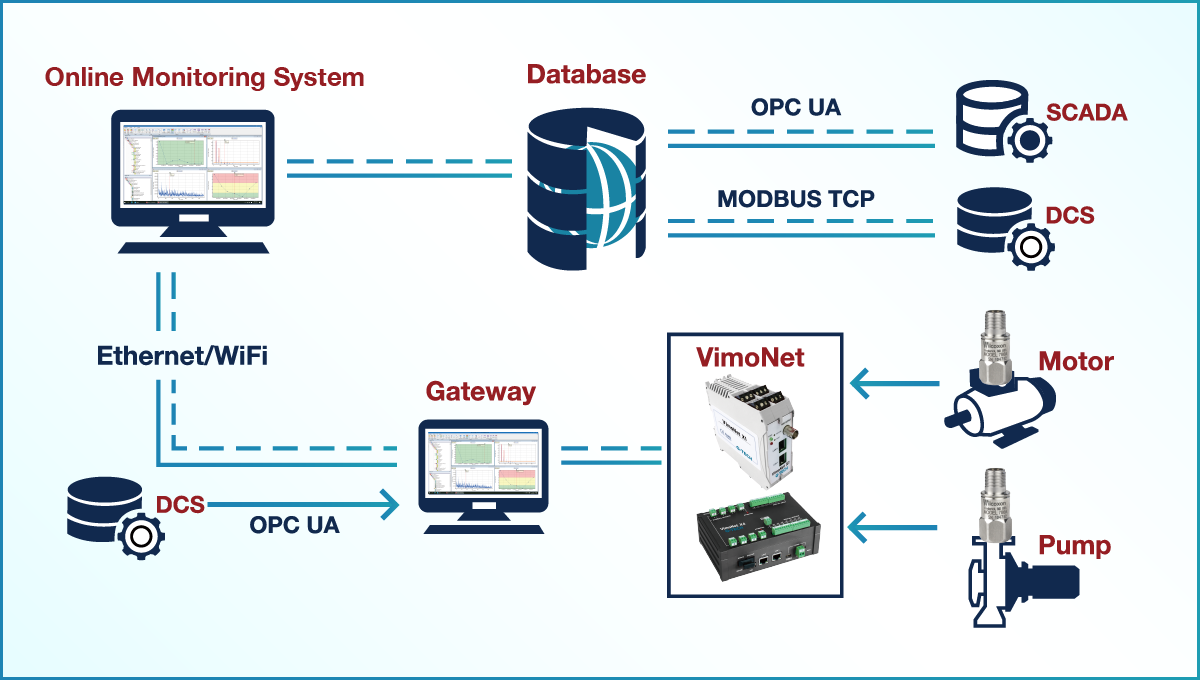
This is why you should have a centralized system where data is collected, uploaded to a database, and analyzed in real time. At G-TECH, our Online Monitoring System allows you to achieve this. It’s a system designed to monitor and diagnose the health of your machinery as smoothly and efficiently as possible. To learn more about our Online Monitoring System, check out the product page by clicking the pic below.
4. Train Staff Effectively. The best equipment and software are easy to use and handle with intuitive interfaces and design. However, this doesn’t mean that training on how to use these tools is not necessary. The technical maintenance staff in charge of predictive maintenance should be properly trained in how to handle and collect data, as well as how to read and analyze data. Only then can proper diagnoses be carried out.
5. Evaluate and Adapt. After establishing and implementing your predictive maintenance strategy, you need to step back to question and evaluate it. Such questions include:
- Are you reaching the intended targets or goals?
- What in the system can be improved?
- What are the strengths of the system?
- What are the weaknesses?
These questions can be properly answered by getting feedback from the maintenance crew in charge of implementing this strategy. Based on the answers to these questions, you can make the appropriate adjustments where necessary to ensure that you and your organization remain on track to fulfill your predictive maintenance goals.
The Importance of Predictive Maintenance
Predictive maintenance is crucial in terms of the levels of control that it gives you over your operations. Industrial operations can be complicated and dynamic, and anything can go wrong for a wide variety of reasons. A reliable predictive maintenance system relies on the accurate collection and analysis of data to make sure that machine issues can be caught before they turn into machine failures or work stoppages.
This results in several advantages. Let’s take a brief look at them after quickly listing them below:
- It reduces unscheduled downtimes
- It extends asset life
- It increases efficiency and machine performance
1. Reducing downtime. If you can prevent machine failures, this means also reducing the likelihood of unscheduled downtimes. This goes a long way in preventing or curtailing what comes along with downtimes: namely, extra costs and delayed or cancelled orders, which may damage your reputation among clients.
2. Extending Asset Life. If machines are continually repaired on time, this also means that they last longer. In short, effectively monitoring machine health and taking corrective action promptly increases the lifespan of equipment.
3. Increasing Efficiency. The first two advantages are related to increased efficiency. Reduced downtime and extended asset life mean that less time is spent repairing and replacing machines or machine parts. It also means that machine performance improves. This has the overall effect of improving the efficiency of your operations.
G-TECH provides both the hardware and software required to deliver an effective predictive maintenance strategy. We have, for example, a range of hand-held vibration analyzers, such as the vPod Pro, which are easy to use and read. Even the most junior engineer on your maintenance staff would be able to use it.
Besides that, our vibration monitoring systems, such as VimoNet X4 and Vt-3510, and vibration sensors, such as the DS-R35, operate on IoT principles and can be seamlessly integrated with software such as our predictive maintenance software. This means data can be collected and transferred between devices for quick and easy analysis, which can immediately alert you to any issues with your machinery and equipment. To learn more about our predictive maintenance products, please check out our product page.