Smart Predictive Maintenance
Smart predictive maintenance represents the most modern approach to maintenance. It takes Industry 4.0 concepts, such as Industrial IoT, machine learning, and data analytics, to carry out proper monitoring of machine health and to predict when machines can fail. Such an approach to predictive maintenance is crucial in achieving Zero Downtime.
Zero Downtime is often seen as too high a standard or too impossible a goal for many operations. However, the way we see it, asking whether or not zero downtime is possible is not the question that we should be exploring. Instead, it makes more sense to ask, Can we afford to have anything lower than the standard of zero downtime?
Modern Industrial operations — both big and small — are at the heart of modern life. A modern society cannot afford to have major industrial operations come to a sudden stop. We're talking about things like:
- Commuting systems
- Navigation and maintenance systems for air transport
- Modern electric grids
- Hospital operations
- Modern water systems
- Food manufacturing and storage
Shutdowns or work stoppages from machine failures in these systems will lead to major inconvenience, monetary loss, and even the loss of life. In short, we can't afford not to have zero unplanned downtimes. This is where smart predictive maintenance comes in. This system of predictive maintenance relies on the latest wireless technology and IoT systems to collect data via sensors and transmit this data to be processed in real-time.
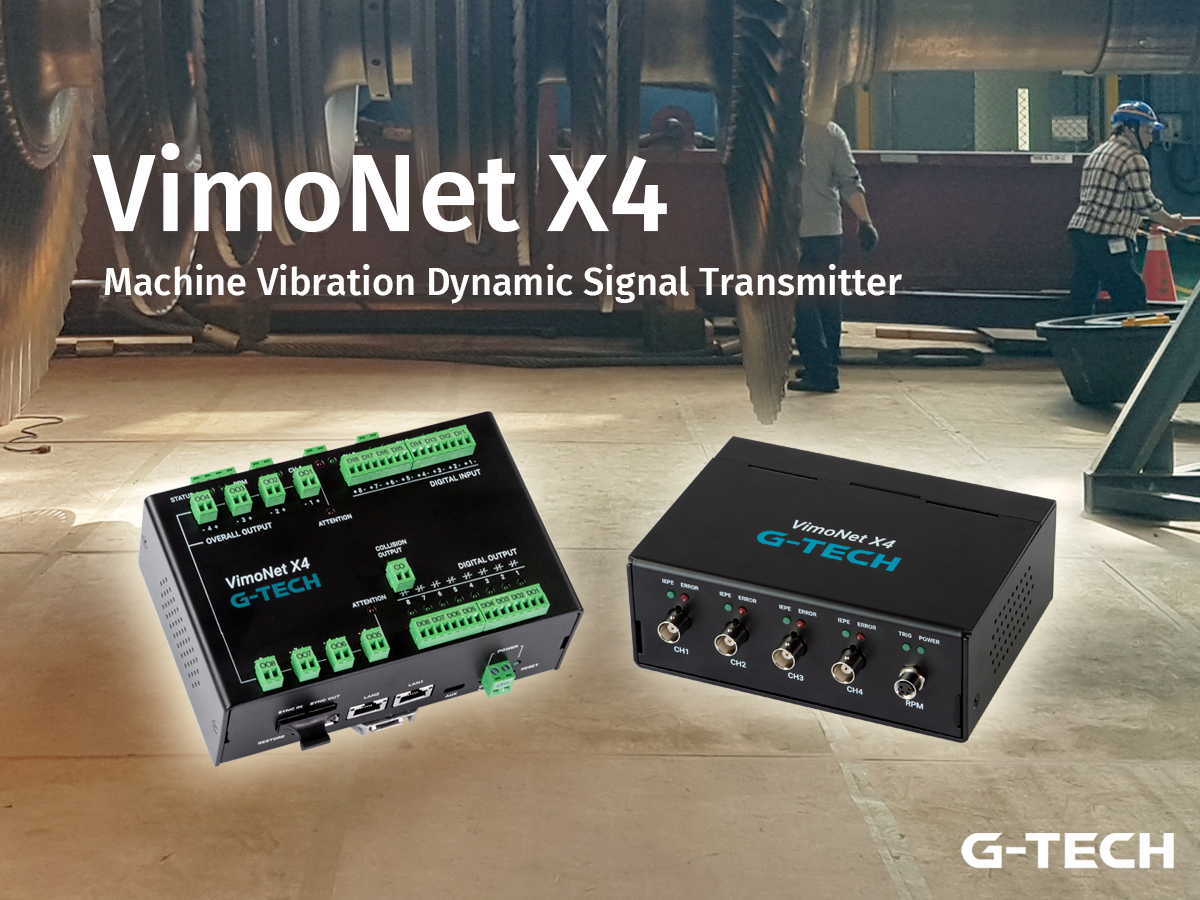
It involves using cutting-edge DSP technology to convert complicated and vast amounts of data into information that can be easily read via human-machine interfaces. A good example of this is G-TECH's VimoNet X4, a signal transmitter that converts analog vibration signals into digital data that can be read and analyzed by your maintenance crew in real-time.
What Is Smart Predictive Maintenance, and How Does It Work?
Smart predictive maintenance is a system that uses sensors, IoT, and data analytics to monitor the health of a machine in real time and predict its failure. There are several benefits that come from this system. It avoids costly work stoppages by allowing for repair and maintenance before a breakdown occurs.
This leads to further benefits such as extending the life of assets and optimizing the performance of your operations. This type of maintenance system is superior to traditional methods of predictive maintenance, such as the reactive method, where you wait for machines to fail and use an average based on a series of recorded failures as a guide for the replacement of equipment.
Smart predictive maintenance that also uses edge technology, which means that they are less reliant on centralized cloud systems. The advantages of this include reduced latency, enhanced data privacy, and facilitating real-time decision-making.
G-TECH designs sensors, tools, and systems in a manner to ensure that they are fully capable of benefiting from smart technology and other Industry 4.0 Concepts. We’re going to see how this approach works by looking at the predictive maintenance software.
How G-TECH Applies Smart Predictive Maintenance
AT G-TECH, we believe in predictive maintenance solutions that rely on Industry 4.0 principles and smart manufacturing. Our predictive maintenance solutions are able to cater to even the most advanced DCA or SCADA-based systems.
We design machine monitoring systems and tools for every one of the steps involved in advanced industrial automated processes. This includes the following:
- Portable and handy vibrometers for data collection
- PC-based vibration analyzers and monitoring systems
- Advanced sensor technology to collect data in harsh field conditions
- DSP technology that converts data in real-time
- Sophisticated analytical software
- Edge-based and centralized data storage systems
Our modern industrial sensors, such as the DS-R35, are designed for the harshest and most dynamic industrial environments and can collect and transmit data accurately to communicate with the devices and systems that constitute your SCADA setup.
In addition, our signal converters and transmitters, such as the VimoNet-X4, are equipped with the latest DSP technology that allows data to be converted, analyzed, and visualized via human-machine interfaces. We also have software systems like the Novian and predictive maintenance software that can be seamlessly integrated into our data-collecting hardware, like vibration analyzers.
Just think of any monitoring tool or system that a SCADA-based modern industrial operation requires, and more likely than not, we’re going to have you covered. People usually treat Industry 4.0 and Industrial IoT as buzzwords and theory. These are not simply concepts or trends for us.
Our hard-working engineers and design philosophy center around converting Industry 4.0 and Industrial IoT concepts into practical tools and systems that can fit in your hand or that you can employ to help achieve zero downtime in your operations. Check out our product page to learn more about our smart solutions for predictive maintenance.